Stoned-Campbell

  • Subscribe to our RSS feed.
  • Twitter
  • StumbleUpon
  • Reddit
  • Facebook
  • Digg
Showing posts with label Jeremiah. Show all posts

Wednesday, January 4, 2012

Rage Against the Storm: Jeremiah, Prayer & Honest Faith (Jer 20.7-18)

Posted on 10:31 AM by Unknown

Meet Jeremiah

Over the years Jeremiah has become one of my favorite places in the Story to meditate, ruminate and munch scripture. He is one of the few biblical characters I've ever taken the time to read a novel about, Thom Lemmons wonderful Jeremiah: He Who Wept. (See How Jeremiah Was Made) Last night I was up laaatttteeeee as I skimmed Jeremiah and settled on chapter 20 for some lectio divina time. I have written down some reflections that emerged in that period with God's word. Here they are ...

After 20 years of full time ministry in Churches of Christ the life of Jeremiah is more meaningful to me than ever before. There have been plenty of rumors and whisperings, complaints about kids, about the wife(s), about divorce, about facebook, sermons are to long, sermons are to short, you're in the ministerial alliance, you're not in the ministerial alliance, illustrations are not real enough, illustrations are too real, you are to scholarly, you preach from the Old Testament, you don't preach what I grew up with, you meddle with my life, being fired ... anyone in ministry long enough has dealt with all of these complaints and sometimes the sheer pettiness of it all. Jeremiah dealt with it all too.

Jeremiah is frequently called the "weeping prophet." He was just a kid when the Lord called him to the ministry (1.6). We read "Before I was formed in the womb I knew you, before you were born I set you apart; I appointed you as a prophet to the nations" (1.5). His ministry is characterized by uprooting and tearing down (1.10). God said "today I have made you a fortified city, an iron pillar and a bronze wall to stand against the kings ... and the people of the land (1.18). Jeremiah lives in a terrible time and his ministry will be full of misery and heartache. God did give a message that he did not always like to share. It sounded unpatriotic. It sounded unreasonable.

After preaching for approximately 25 years in Jer 20, five more than I have been currently, the people of God hate the Preacher more than ever! He has been jailed, nearly beaten to death in response to his sermons, he has been destitute, cold and hungry. The people of God believe Jeremiah is actually a false prophet who has betrayed the nation of Judah and had formed an alliance with her arch enemy - Babylon. A message had been sent throughout the land that the "madman who acts like a prophet" is to "be put into stocks and neck-irons" - Jeremiah was that madman (29.26-27, NIV). Twenty five years has taken its toll on Jeremiah. He is tired of being God's man. It hurt too much - both physically and emotionally. He is worn out and just wants out!!

The Bed of Roses

As we look at ch. 20, Jeremiah has just preached a sermon in the temple courts, using a clay jar as an illustration (we know illustrations can get you in trouble). He dramatically throws the jar to the ground declaring this is how God is breaking Judah herself apart (19.10ff). Pashur, a temple officer, did not like the sermon and was deeply offended. He literally had Jeremiah arrested, thrown in jail and beaten - for what amounted to treason (20.2). Jeremiah was released in the morning. In the face of this opposition to his sermon, Jeremiah is strong like a pillar and solid like walls of brass while dealing publicly with critics.

Once the action settles and the prophet is alone with his thoughts, however, he falls apart. Jeremiah had had enough! Listen to his gut wrenching words. Listen to a man who gets brutally honest with God. This is prayer in the raw and his honesty is literally shocking:

O Lord, you deceived me, and I was deceived; you overpowered me and prevailed. I am ridiculed all day long; everyone mocks me. Whenever I speak, I cry out proclaiming words of violence and destruction. So the word of the Lord has brought me insult and reproach all day long. But if I say, "I will not mention him or speak any more in his name," his word is in my heart like a fire, a fire shut up in my bones. I am weary of holding it in; indeed, I cannot. I hear many whispering, "Terror on every side! Report him! Let's report him!" All my friends are waiting for me to slip, saying, 'Perhaps he will be deceived; then we will prevail over him and take our revenge on him." (20.7-10)

Some feel Jeremiah's rage against the storm is on the verge of blasphemy. I do not! This is authentic faith. I love the Hebrew Bible's integrity! God has overpowered Jeremiah. Or at least that is how he feels. Jeremiah is saying, like some psalmists, "why don't you leave me alone!" Why do I suffer since I am in your service? The "congregation" mocks him, his so called friends actually are biding their time to see him flub up and then they can revel in it.

Can we hear the burning emotion in this prayer? It is hard to miss. Does God get angry with Jeremiah for accusing him of lying? That is bold! Indeed what is revealed is the depth of authenticity in the relationship between Jeremiah and his Lord. God respects those who are in covenant with him. Yahweh is not threatened nor angered by Jeremiah's outburst. What faith is revealed. How you ask? Because Jeremiah is not afraid, he does not "play it safe," in his prayer. He lays it on the line because his life is on the line. Only a heart supremely confident in trust and faith in the kind of God Yahweh is dares to pray like this. This is prayer from a bed of roses - full of beauty and thorns.

Fire in Our Bones

From the early days of my life 20.9, "his word is like a fire in my bones, has been proof texted in sermons on evangelism. But I never heard a sermon on this verse in its context. Jeremiah's words are hardly positive to him. They are negative. God's Word is an alien, all consuming fire that is beyond the preacher's control and he wants to get rid of it. Jeremiah, after 25 years, is not under the delusion that being a prophet was some glorious easy task. The opposite is true. Being a prophet is the last thing he wants to do. We all must admit there are times in our lives when we have felt like Jeremiah but were perhaps not quite as secure in our relationship with the Lord to verbalize our frustrations as he did. But perhaps it really is necessary to grow into authentic biblical God-honoring faith.

Even with his bold raging against the storm, Jeremiah still has unconquerable faith in Yahweh. He knows that he will be taken care of in the ultimate sense. He has suffered but the God of Israel has been there. Hear more words in his prayer ...

"But the LORD is with me like a mighty warrior; so my persecutors will stumble and not prevail. They will fail and be thoroughly disgraced; their dishonor will never be forgotten. O LORD Almighty, you who examine the righteous and probe the heart and mind, let me see your vengeance upon them, for to you I have committed my cause. Sing to the LORD! Give praise to the LORD! He rescues the life of the needy from the hands of the wicked (20.11-13).

In the midst of his rage, Jeremiah confesses the Lord will eventually make things right. He has put his life in the hands of God and that is a fearful thing to do. Yet according to the Story of God in the Bible that is, ironically, the safest place to be.

As I reflected last night on this brutally honest text I was reminded in my prayer that God has often, and mysteriously, approached his Creation from a position of weakness and powerlessness. From that "power base" he interweaves glory with suffering to bring honor to his name. Israel suffered slavery. Jesus left equality with God to become flesh to suffer alongside us. God used that suffering in Egypt and in the life of Jesus - especially at the Cross - to set the captives free, to set creation free, to conquer death. In Jeremiah's life he became a Suffering Servant because God's people had abandoned him. They deserted him and it would take a man who could get dirty to bring them back. But the truth and fact of the matter is that Jeremiah failed! There was Jesus the Nazarene and the powers declared him, like Jeremiah, a fraud and failure. That is why they killed him. Yet God declared him to be True and the "winner" and opened his tomb. It was through Suffering that victory emerged in the healing of the world ... and made Jeremiah a winner too.

Faith is Sometimes a Thin Cord

Even though Jeremiah knows God will reverse the world's verdict one day ... even the verdict of God's own people ... that still does not take away the loneliness and misery he experienced and felt in the here and now. In verses 14-18, the Prophet sinks even deeper in the abyss of despair. His words can, and will, make your heart hurt - if it is a heart of flesh. These words of prayer show faith hanging on by a very fine thread. They are words of raging against the storm. In my twenty years of preaching, when I have been viciously attacked for some minor infraction (often no infraction at all except somebody's opinion) by the very people I have prayed with, sat with, buried, married, struggled with and the like, I can be honest enough and say that though I never prayed with Jeremiah's boldness I have "wondered out loud" in prayer ... Jeremiah gives no quarter to those who place value on facades in faith. Jeremiah has become Israel personified: He is Wrestling with God! May we become authentic in our faith ...

"Cursed be the day I was born! May the day my mother bore me not be blessed! Cursed be the man who brought my father the news, who made him very glad, saying, "A child is born to you-- a son!" May that man be like the towns the LORD overthrew without pity. May he hear wailing int he morning, a battle cry at noon. For he did not kill me in the womb, with my mother as my grave, her womb enlarged forever. Why did I ever come out of the womb to see trouble and sorrow and to end my days in shame?" (20.14-18)

Verse 14 is nearly as shocking as verse 7! Our western pious sensitivities are unprepared for the brutal honesty of biblical faith at times. But there Jeremiah gives voice to such pain that we dare not become vain wise men like Job's comfortless comforters after he voiced almost the same curse (cf. Job 3). But Jeremiah also once said, on a prettier day perhaps, "the human heart is deceitful above all things" (17.9). Jeremiah's cry is simply that of hundreds of disciples who have endured Dark Night(s) of the Soul - Why Lord Why?

God's love and protection have been eclipsed by the pain he is experiencing. He sees the evil. He sees the suffering. He sees the pain. The wicked prosper and the righteous are persecuted and maligned - just as he is. He preaches the Word of the Lord and is jailed for treason. He delivers a sermon with powerful illustrations and he is beaten. He serves God and is thrown into a slimy mud pit. He cries out in protest in this prayer! Why, O Lord? Why?

Final Reflections on Rage, Grace & Honest Faith

Jeremiah's prayer ends in misery. There is no reply from heaven. No still small voice. Only dreadful silence! God has heard the prayer of his suffering servant. I believe ... (I surely do believe this because of Jeremiah 8-9, See God's Tears or Mine?) ... that the God of the Universe's eyes welled up with tears for the sake of Jeremiah. Jeremiah did not understand. God did not and does not delight in the pain of Jeremiah. God did not take joy in that any more than in the abuse by the people Jeremiah preached too. But Jeremiah knew his preaching was not going to save his family, his friends, his nation and that was even more suffering than the abuse from his audience. But God did shed tears and he listened to his man rage against the storm. In the venting there was grace.

Can we identify with Jeremiah? Can we pray like he did? I think Martin Luther, who also knew a great deal about suffering had a wise and biblical perspective on Jeremiah. He said it was easy "to condemn this impatience [in Jeremiah] and call attention to the need of patience, these are merely speculative theologians. If you will listen with actual experiences of practical life, you will understand [Jeremiah]. Stories such as this one are too great we should dispute them in only theoretical fashion" (quoted in Theodore Laetsch, Jeremiah, p. 179).

Any disciple who has experienced the tactics of Satan knows how wearing the battle can be. Jeremiah speaks for all of us - thank God for him. Praise God that he opened up in honest prayer. Thank God he gave us a prayer for the kingdom.

God never censures his man because of these bold words. In fact even though the word is not here, you will never find a moment of greater grace in the life of Jeremiah! There are few passages in the Bible where the contrast between humanity and God's magnificent grace is brought in sharper focus than right here. With the storm blowing with all its fury, Jeremiah can only turn to Yahweh and vent - even Rage against the Storm! God is big enough, God is loving enough, God is gracious enough to allow Jeremiah to find healing for his soul by casting his hurts and disillusionment upon him. Just as Jesus has told us too. That is what Jeremiah did.

Then God sent him to preach ... again!
Read More
Posted in Hebrew Bible, Jeremiah, Ministry, Prayer, Preaching, Spiritual Disciplines | No comments

Saturday, July 23, 2011

Baruch and the Letter of Jeremiah: Don't Fear, They are not Gods

Posted on 2:44 PM by Unknown

Baruch

Introduction

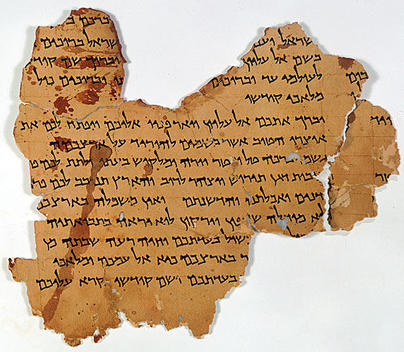
Baruch along with the Letter of Jeremiah are probably among the earliest (i.e. oldest) of the writings contained in the Old Testament Apocrypha. Because of the abundance of “Hebraisms” the original language of these works is believed to be Hebrew. The now lost Hebrew originals were written sometime between 300 and 160 B.C. for Baruch and 317 and 306 B.C. for the Letter of Jeremiah (the issues are complicated but for the curious see, David deSilva, Introducing the Apocrypha, pp. 204-205 and 216-217). The Letter of Jeremiah has been found among the Dead Sea Scrolls. Baruch has not been identified among the DSS, however, since the Letter was often chapter 6 of Baruch we cannot be certain that Baruch was not among the Scrolls. Baruch has a composite nature so parts of the book are older than others.

Interestingly enough there is a historical “blunder” in Baruch. Baruch 1.11 for example says that Belshazzar was Nebuchadnezzar’s son as does Daniel 5.2, etc. There is an historical problem here (Belshazzar was not N’s son but Nabonidus) and the relation between Daniel and Baruch is disputed at this point.

Baruch: The Confessional Prayer

Baruch is made of five chapters containing a variety literary forms. The book opens with a narrative similar to Nehemiah 8-9 and 2 Kings 22.8-13. The narrative creates a setting in which Baruch “reads” to the exiles in Babylon after the destruction of the Temple in 586 B.C. (the date “in the story” would be around 582). Interestingly enough Baruch contains the command to read the book in the “house of the Lord”:

“And you shall read aloud this scroll that we are sending you, to make your confession in the house of the Lord on the days of the festivals and at appointed seasons” (Baruch 1.14).

This is interesting because Protestant apologists have frequently said that no apocryphal book claims to be authoritative ... one wonders what this text is claiming?

The first major section of the book (1.15-3.8) contains a prayer of confession. In this the Jews take full blame for the disaster that has befallen them. It is because of their faithlessness to the covenant that Yahweh has disciplined them,

“we have sinned before the Lord. We have disobeyed him, and have not heeded the voice of the Lord our God, . . . From the time when the Lord brought our ancestors out of the land of Egypt until today, we have been disobedient to the Lord our God . . .” (Baruch 1.17-19)

“We have sinned, we have been ungodly, we have done wrong . . .” (2.12)

The prayer reveals a repentant heart on Baruch’s, and the Exiles, part. The prayer also has a firm belief that God is a merciful God. So not only do we see confession of sins and remorse but we see pleas based upon the grace of the Lord. Notice that the writer does not believe that Israel merited any blessing from the Lord,

“Hear, O Lord, our prayer . . . and for the sake of your own sake deliver us, and grant us favor . . .” (Baruch 2.14)

“For it is not because of any righteous deeds of our ancestors or our kings that we bring before you our prayer for mercy, O Lord our God.” (Baruch 2.19)

In spite of the exile, Baruch, confesses that God has been good and dealt with Israel in “kindness.” The book appeals directly to the promise of God in Deuteronomy 4.25-31, that should exile come because of sin, God will heal and restore Israel if they call on him.

That is why Baruch prays,

“you have dealt with us, O Lord our God, in all your kindness and in all your great compassion, as you spoke by your servant Moses . . . For I know that they will not obey me, for they are a stiff-necked people. But in the land of their exile they will come to themselves and know that I am the Lord their God. I will give them a heart that obeys and ears that hear . . . I will bring them back again into the land” (Baruch 2. 27, 30-31, 34).

Baruch: The Psalm of Praise

The second major section of Baruch is a hymn of praise to wisdom – the wisdom of serving God alone. Wisdom is of incredible value and it is because Israel did not value wisdom that she is now in a “foreign country” (Baruch 3.10). In its context, the hymn helps Israel to do what they prayed – turn their hearts back to God. But it is only by being devoted to the “book of the commandments of God” (Baruch 4.1) that she can ever hope to live. Note that wisdom according to Baruch is not simply philosophy but it is in fact the words of God that embody wisdom. These words bring life (cf. John 5.39; 6.63, 68) if they are clung too.

Though there is much that is worthy of attention in this section we can only examine Baruch 3.35-37. This particular passage played an important role in the early church. The “Church Fathers” repeatedly appealed to this text as referring to Jesus Christ. The text reads,

This is our God; no one can compare to him.
He found the whole way to knowledge,
and gave her to his servant Jacob and to
Israel, whom he loved.
Afterward she appeared on earth and lived with humankind
.
(Baruch 3.35-37).

Early Christians like Origen, Cyprian, Tertullian and Lactantius along with a host of others thought this was prophecy of the Incarnation and the growth of Christianity among the Gentiles.

Baruch: Zion is Encouraged

The last section of Baruch (4.5-5.9) is a personification of Zion (Jerusalem) as she provides hope for the future to a disgraced and exiled people. Zion expresses her grief at seeing her “children” taken off into captivity. She has “faith” however that God will deliver them if they turn to God (4.5-29). Repeatedly the exiles are exhorted to “take courage” (4.5, 21, 27, 30) because God has not cast off his people forever. Here are a few choice texts,

“For he who brought these calamities upon you
will deliver you from the hand of your enemies
”
(Baruch 4.18).

“I sent you out with sorrow and weeping,
but God will give you back to me with
joy and gladness forever
.” (Baruch 4.23)

“Look, your children are coming, whom
you sent away; they are coming, gathered
from east and west, at the word of the Holy
One, rejoicing in the glory of God
.”
(Baruch 4. 37).

“For God will lead Israel with joy,
in the light of his glory, with the mercy
and righteousness that come from him
.”
(Baruch 5.9).

Baruch moves from confession of sin and acknowledgement of the righteous judgment of
God. Then the book exhorts us to find true life and wisdom through the word of God. And finally the book closes with the promise of God grace and mercy in the return of the exiles. The final verse, quoted above, is a beautiful image to behold. God is leading his children with joy and mercy down the highway to a beautified Jerusalem.


The Letter of Jeremiah

The Letter of Jeremiah is not really a “letter” but a polemic against Babylonian (and pagan) religion. “Jeremiah” writes instructing the first exiles to keep their faith in Yahweh in a world that is surrounded by beautiful and awe inspiring idols. “Jeremiah” seeks to inoculate these deportees by showing the ridiculous nature and status of an image. This was indeed a relevant message to Jews any time during their history and is just as relevant to Christians: idolatry is false and we need not fear those things in our lives that would claim to be deity that have no claim.

Basic Facts about the Letter

The Letter of Jeremiah is most likely the oldest of the Apocrypha. Based upon 6.3 “up to seven generations” which describes the length of the Exile will be, scholars deduce the book was written in the late fourth century around, 317 to 306 B.C. (see deSilva, Introduction to the Apocrypha, pp. 216-217 and Carey A. Moore, The Anchor Bible: Daniel, Esther, and Jeremiah: The Additions, pp. 327-328, 335). Other factors go into the date of the book as well: 1) enough time has to be allowed for it to be translated into Greek prior to inclusion in the Septuagint; 2) the fact that it is referred to in 2 Maccabees 2.1-2, 4 as being written by Jeremiah (2 Macc itself dates approximately around 100 B.C.); 3) it being found among the Dead Sea Scrolls.

The order of the Jeremiah “corpus” of material in the Greek tradition is different than in the Latin tradition. In the great codices Vaticanus and Alexandrinus the order is Jeremiah, Baruch, Lamentations, Letter of Jeremiah. In the Syriac and the Latin the Letter of Jeremiah is added to Baruch becoming chapter 6 (Jerome is responsible for this). Most modern versions for some reason still number the Letter as chapter six even though it is set by itself as it should be.

The content of the Letter of Jeremiah parallels numerous biblical passages on idolatry. As to be expected there are echoes of Jeremiah in the Letter. For example Jeremiah 10. 1-15 contains a parody on idols as well and surely provides grist for the author of the Letter. Other passages where humor is extended at the expense of idols can be found in Isaiah 44.9-20 and Psalm 115.3-8.

Literary Outline

The Letter of Jeremiah is divided up into ten sections each being marked with a negation of the reality of pagan gods. This negation serves as a refrain through the Letter as an organizing principle, “From this it is evident they are not gods; so do not fear them” (vv. 16; 23; 29; 65; and 69) or “Why then must anyone think that they are gods, or call them gods?” (vv. 40; 44; 52; 56; and 64). The Letter closes with an affirmation of the honor of the person who does not degrade himself into worshipping idols (v.73). The thundering refrain in the Letter is similar (in purpose) to the refrains in such biblical passages as Psalm 42 and 43 (one psalm) and Psalm 107.


Choice Texts

“When you see the multitude before and behind them [idols] worshipping them Say in your heart, ‘It is you, O Lord, whom we must worship.” For my [God’s] angel is with you, and he is watching over your lives.” (vv. 6-7)

“They [idols] are just like a beam of the temple, but their hearts, it is said, are eaten away when crawling creatures from the earth devour them and their robes. They do not notice . . .” (v. 20).

“How can one fail to see that these are not gods, for they cannot save themselves from war or calamity?” (v. 49).

“So it is better to be a king who shows his courage, or a household utensil that serves its owner’s need, than to be these false gods; better even the door of a house that protects its contents, than these false gods; better a wooden pillar in a palace, than these false gods.” (v. 59).

“Like a scarecrow in a cucumber bed, which guards nothing, so are their gods of wood . . .” (v. 70).

Because all of this is so, then . . .

“Better, therefore, is someone upright who has no idols; such a person will be far above reproach.” (v. 73).

Baruch and the Letter of Jeremiah are among the lesser important Apocrypha. However they were both frequently simply "went along" with Jeremiah like Lamentations did in the ancient church. They have a place in the history of the Bible and were part of the English Bible tradition for hundreds of years. Both were included in the King James Version.
Read More
Posted in Apocrypha, Bible, Jeremiah, Jewish Backgrounds, King James Version | No comments

Wednesday, April 16, 2008

Tears: God's or Mine (Reflections on Jeremiah from the Pit of Divorce)

Posted on 11:20 PM by Unknown


Here are some late night thoughts ... so take them for what they are. My friend John Mark Hicks was providentially moved to post a series on What Divorced People Feel and How to Minister to Divorced People. I know God had a hand in that. I don’t think John Mark set out to write for me … but perhaps James A. Harding would say that he was lead to do so. Danny Dodd also has a very good reflection on this scourge.

You see I am divorced. Not by choice but I am divorced. I never dreamed nor imagined I would be ... but I am. I have no desire to humiliate my (ex)wife, my girls, my family, my congregation, my God … or myself. I have no desire to make those I have loved (and still do) for so many years look bad. I do not want to say it was “her” fault because the truth is more complicated than that. What I do know is that I participated in destroying that which was so fundamentally holy, sacred, and important to even me (much less God!). I did not want to and did not intend to and did not mean to. I have no explanation as to why. I can say with Paul “I have the desire to do what is good … but the evil I do not want to do – this I keep on doing” (Rom 7.18-19). I have come close to loathing myself for my failures … that is why I have said earlier that the song/video (One Last Breath) by Creed comes close to evoking the feelings of pain but even it falls short.

I have some new insight (to me) into Scripture … not what it actually says but through a melding of its words with my own circumstance things now stand out in bold relief. I have known about the texts of Jeremiah 8-9 for a long time. I even did a presentation on them a few years ago at the Lake Geneva Family Encampment but now I read them with a vested interest.

It is not without providential irony that I was asked to teach Jeremiah last year for class called “Coffee with Bobby” with a group every Tuesday morning. Jeremiah is full of pain. He was a reluctant prophet! He reports that Yahweh himself went through the bitter pain of divorce (3.6-8). Those influenced by neo-Platonic views of God rarely think of the suffering of God in the Hebrew Bible but divine pathos is there in bold relief. The story of Jeremiah seems to be written with tears rather than ink!

The scroll of Jeremiah from 8.18-9.22 zeroes in on an image of God that has meant a great deal to me lately. God is King indeed … but he is a crying King! Yahweh is declared to be the speaker of these incredibly moving words (9.3, 6, 17, 22). The “death” of a relationship was intensely painful for Yahweh. The words of Yahweh border on radical,

“O my comforter in sorrow, my heart is faint within me” (8.18)

God’s heart is shattered ...

“Since my people are crushed, I am crushed; I mourn and horror grips me” (8.21).

The heart of Yahweh is so heavy that he bursts out in tears

“Oh, that my head were a spring of water and my eyes a fountain of tears!” (9.1)

Later Yahweh “confesses” that he does not have enough tears for the occasion so he calls for the professional mourners to come in to help supply the tears for the occasion … he invites them to shed tears not only for Israel but for him …

“Consider now! Call the wailing women to come; send for the most skillful of them. Let them come quickly and wail over US till OUR eyes overflow with tears and water streams from OUR eyelids …” (9.17-18)

J. J. M. Roberts has shown that pagan deities were also known to shed tears for their people (see “The Motif of the Weeping God in Jeremiah and Its Background in the Lament Tradition of the Ancient Near East” from 1992). What the idols could never do, Yahweh does in reality. His marriage has ended in a heartbreaking divorce … so heartbreaking that God had hired the mourners to come in to make up the deficit in tears. This is pain. So much pain, in fact, one could almost describe Jer 8-9 as clinical depression!! God has an endless river of tears … God wishes (it seems to me) to escape the pain but “cannot.” His heart will not let him. For anyone who has gone through divorce this is all too true.

Though God has not chosen to reveal to me why hell has invaded my life he has shown me his own broken heart. The God of the cross is first the God of the broken heart. The God of judgment is first the God who weeps violently for his bride. This is an image of God I assuredly did not grow up with.

No answers to my questions. But I have fellowship in my tears. It is in the Bible,

“My tears have been my food day and night …” (Ps 42.3)

“Record my lament; list my tears on your scroll – are they not in your record?” (Ps 56.8)

“You have fed them with the bread of tears; you have made them drink tears by the bowl full” (Ps 80.5)

“For I eat ashes as my food and mingle my drink with tears” (Ps 102.9)

God cries because we have left him for other gods. We cry because we have willingly or unwillingly participated in the destruction of his creative intent. We cry a lamentation for what is wrong in this world. As we cry we find, ironically, intimate fellowship with the Creator himself. My tears are but a poor imitation of his own. It is here that we will one day find shalom and healing. It is here that we hope to find the new creation … which is simply that place where God’s will is done on earth as it is in heaven. A place where there will be no tears. Our Abba will wipe away our tears (Rev 21.4) because he has already shed a few of his own. God knows what a broken heart feels like ... to someone like me this is ... good news!


Seeking Shalom,

Bobby Valentine
Read More
Posted in Hebrew Bible, Hermeneutics, Jeremiah, Kingdom, Ministry, Preaching, Psalms, Spiritual Disciplines, Suffering | No comments
Older Posts Home
Subscribe to: Posts (Atom)

Popular Posts

  • Alexander Campbell, Rebaptism & Sectarianism
    The immersion of Alexander Campbell in 1812 by Baptist preacher Mathias Luce has been long been a troublesome issue for some heirs of the St...
  • Prayer in the Apocrypha 3: Judith's Psalm of Praise
    " Therefore this is a fine, good, holy, useful book, well worth reading by us Christians. For the words spoken by the persons in it s...
  • What the "Assembly" is "About in the Psalms: Special Attention to Ps 95
    In Scripture a Spiritually minded worshiper comes to the assembly (i.e. gathering) of the People of God desiring five things: 1) The worshi...
  • Tulsa Workshop Anyone...
    I was at the Tulsa Workshop a couple years ago when John Mark Hicks and I spoke together. I didn't make it last year due to other commi...
  • Jonah #7: God's Heart & His Struggle with Israel (Symmetry & Irony )
    " Salvation comes from and belongs to the LORD " (Jonah 2.9, BV) Frequently in this series of essays on Jonah, I have stressed tha...
  • (no title)
    Snow in the Desert ... at least on the Mountains While the rest of the country has been getting pummeled with ice and snow ... old man winte...
  • Paul and the Unquestioned Authority of the "Old Testament"
    This is a revised and slightly expanded version of a "note" I had placed on my Facebook. May it bless you as we wrestle together w...
  • Barton W. Stone & the Debate Culture
    I grew up in a "debating culture" or perhaps it was a "sub-culture."  If the minister did not like what was going on a m...
  • Uncle Tom's Cabin, The Bible & America, #2
    " Reading the Bible with the eyes of the poor is a different thing than reading the it with a full belly. If it is read in the light of...
  • Things I Do NOT Believe
    Some times people will attempt to write a short summary of what they believe and hold dear. This summary is often called a creed. Because I ...

Categories

  • 1 Corinthians (3)
  • 1 Thessalonians (1)
  • 1 Timothy (1)
  • A Gathered People (3)
  • Abraham (1)
  • Acts (2)
  • Africa (1)
  • Alexander Campbell (23)
  • American Empire (1)
  • Amos (5)
  • Apocrypha (24)
  • Apologetics (1)
  • Baptism (10)
  • Barack Obama (1)
  • Barton W. Stone (3)
  • Benjamin Banneker (1)
  • Bible (107)
  • Black History (17)
  • Bobby's World (187)
  • Books (66)
  • C. S. Lewis (1)
  • Carl Ketherside (1)
  • Christian hope (57)
  • Christmas (14)
  • Christology (1)
  • Church (53)
  • Church History (84)
  • Clay Parkinson (1)
  • Colossians (7)
  • Contemporary Ethics (56)
  • Cool Stuff (2)
  • Culture (3)
  • Daniel (2)
  • David Lipscomb (6)
  • Deuteronomy (6)
  • Didache (1)
  • Discipleship (29)
  • Doug Doser (1)
  • Easter (3)
  • Ecclesiastes (3)
  • Environment (1)
  • Ephesians (4)
  • eschatology (25)
  • Esther (1)
  • Exegesis (149)
  • Exodus (2)
  • Faith (11)
  • Family (24)
  • Famiy (1)
  • Football (1)
  • Forgiveness (1)
  • Frederick Douglass (1)
  • Galileo (1)
  • Genesis (1)
  • Gnosticism (1)
  • Gordon Fee (1)
  • Gospel of John (1)
  • Gospel of Judas (1)
  • Grace (46)
  • Habakkuk (2)
  • Hanukkah (1)
  • Harriet Beecher Stowe (1)
  • Heaven (6)
  • Hebrew Bible (97)
  • Hebrews (2)
  • Hermeneutics (113)
  • Holding On (2)
  • Holy Kiss (1)
  • Holy Spirit (12)
  • Humor (7)
  • J. W. McGarvey (3)
  • J.N. Armstrong (1)
  • James (2)
  • James A. Harding (5)
  • James Challen (1)
  • Jeremiah (3)
  • Jerry Rushford (1)
  • Jesus (79)
  • Jewish Backgrounds (19)
  • John Lennon (1)
  • John Newton (1)
  • John Waddey (1)
  • John Wyclif (1)
  • Jonah (10)
  • Jonathan Edwards (2)
  • Journey (8)
  • Jude (1)
  • Judith (2)
  • K. C. Moser (6)
  • King David (1)
  • King James Version (23)
  • Kingdom (118)
  • Kingdom Come (4)
  • Lectures (10)
  • Lord's Supper (4)
  • Love (4)
  • Luke (2)
  • Mark (1)
  • Marriage (2)
  • Martin Luther (1)
  • Martin Luther King (3)
  • Matthew (1)
  • Milwaukee (6)
  • Ministry (175)
  • Mission (43)
  • Monroe Hawley (1)
  • Moses Lard (1)
  • Movies (1)
  • Music (62)
  • N.T. Wright (5)
  • Nahum (2)
  • New Mexico (1)
  • Numbers (1)
  • Pardee Butler (1)
  • Patternism (4)
  • Paul (2)
  • Personal (11)
  • Philippians (1)
  • Politics (4)
  • Prayer (46)
  • Preaching (152)
  • Psalms (15)
  • R. C. Bell (1)
  • R. H. Boll (1)
  • Race Relations (21)
  • Reading (2)
  • Restoration History (77)
  • resurrection (2)
  • Revelation (1)
  • Richard Oster (1)
  • Romans (3)
  • S. R. Cassius (1)
  • Sabbath (2)
  • Salvation (2)
  • Sectarianism (8)
  • Septuagint (1)
  • Sexuality (2)
  • Sirach (1)
  • Slavery (2)
  • Song of Songs (4)
  • Spiritual Disciplines (50)
  • Suffering (11)
  • Tags (7)
  • Theodicy (2)
  • Tobit (3)
  • Tucson (22)
  • Uncle Tom's Cabin (2)
  • Unity (35)
  • Veggie Tales (1)
  • Walter Scott (1)
  • War -Peace (8)
  • Wisdom of Solomon (2)
  • Women (7)
  • Worship (43)

Blog Archive

  • ▼  2013 (23)
    • ▼  August (8)
      • What the "Assembly" is "About in the Psalms: Speci...
      • Prayer in the Apocrypha 3: Judith's Psalm of Praise
      • Paul and the Unquestioned Authority of the "Old Te...
      • Rocks, Martin & Psalm 62
      • Barton W. Stone & the Debate Culture
      • C. S. Lewis: Love is an Undying Fire
      • Can the King be Trusted? The Vision of Psalm 73
      • Prayer in the Apocrypha 2: Tobias & Sarah's Weddin...
    • ►  July (2)
    • ►  June (5)
    • ►  May (2)
    • ►  March (1)
    • ►  February (3)
    • ►  January (2)
  • ►  2012 (33)
    • ►  December (4)
    • ►  November (4)
    • ►  October (1)
    • ►  August (2)
    • ►  July (1)
    • ►  June (4)
    • ►  May (3)
    • ►  April (1)
    • ►  March (4)
    • ►  February (4)
    • ►  January (5)
  • ►  2011 (58)
    • ►  December (7)
    • ►  November (1)
    • ►  October (3)
    • ►  September (4)
    • ►  August (9)
    • ►  July (6)
    • ►  June (7)
    • ►  May (6)
    • ►  April (5)
    • ►  March (4)
    • ►  January (6)
  • ►  2010 (49)
    • ►  December (4)
    • ►  November (2)
    • ►  October (6)
    • ►  September (1)
    • ►  August (8)
    • ►  July (7)
    • ►  June (1)
    • ►  May (7)
    • ►  April (2)
    • ►  March (5)
    • ►  February (4)
    • ►  January (2)
  • ►  2009 (61)
    • ►  December (9)
    • ►  October (4)
    • ►  September (4)
    • ►  July (1)
    • ►  May (10)
    • ►  April (3)
    • ►  March (5)
    • ►  February (17)
    • ►  January (8)
  • ►  2008 (131)
    • ►  December (12)
    • ►  November (10)
    • ►  October (13)
    • ►  September (19)
    • ►  August (13)
    • ►  July (13)
    • ►  May (15)
    • ►  April (13)
    • ►  March (11)
    • ►  February (7)
    • ►  January (5)
  • ►  2007 (115)
    • ►  December (5)
    • ►  November (2)
    • ►  October (7)
    • ►  September (9)
    • ►  August (9)
    • ►  July (11)
    • ►  June (7)
    • ►  May (17)
    • ►  April (15)
    • ►  March (12)
    • ►  February (11)
    • ►  January (10)
  • ►  2006 (30)
    • ►  December (11)
    • ►  November (6)
    • ►  October (10)
    • ►  September (3)
Powered by Blogger.

About Me

Unknown
View my complete profile